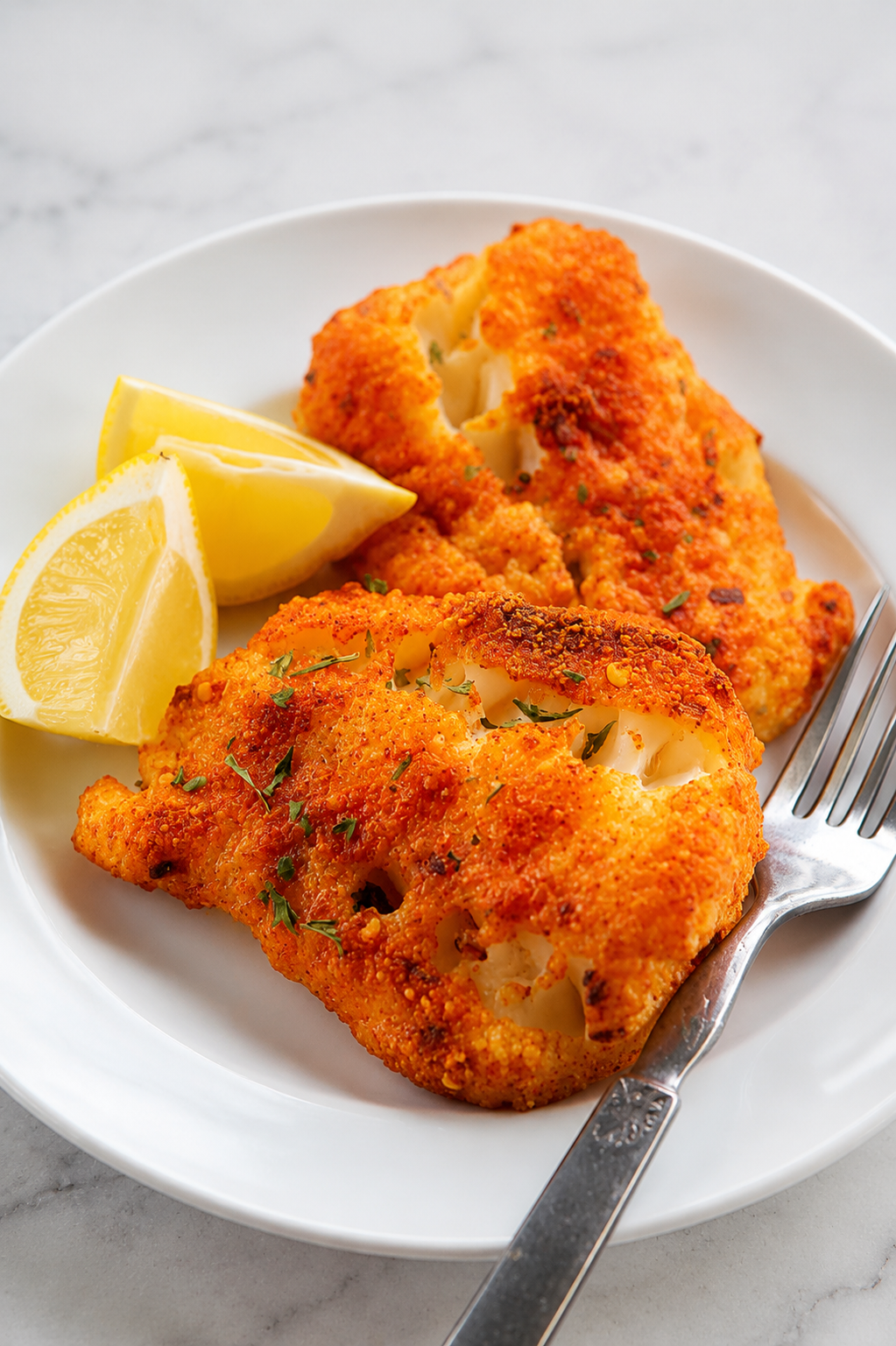
Parmesan Crusted Cod That’s Ready Before You Set the Table
This is my go-to parmesan crusted cod recipe, and it never lets me down.
My husband and I made a deal a while back to eat less beef and more fish, the kind of vague New Year’s-adjacent promise most people forget by February. This is the recipe that actually kept us honest. It was one of the first fish dinners that didn’t feel like a compromise — it felt like something we’d choose even without the goal hanging over us.
Cod gets a bad reputation as boring, but that’s really just a seasoning problem. Give it a crust of parmesan and warm spices and a hot oven, and it turns into something you’d happily order at a restaurant, minus the wait and the bill.
Why You’ll Love This
It’s low carb, it’s quick, and it uses a small handful of pantry staples you probably already have open in the fridge. The parmesan forms a genuinely crisp crust rather than a soggy coating, and the whole thing goes from raw to dinner in under twenty minutes, which makes it one of the easier ways to get more fish into a weeknight rotation.
Why This Works
The egg wash is what makes the parmesan crust cling instead of falling off in the oven — it gives the cheese something to grip onto as it dries out and crisps. Baking at a high temperature, 425°F, means the crust sets and browns quickly while the fish inside stays just barely cooked through, which is exactly what keeps cod tender instead of chalky or dry.
How to Make Parmesan Crusted Cod
Step 1: Set Up Two Dishes
Beat an egg in one shallow dish. In a second, stir together grated parmesan, garlic powder, onion powder, smoked paprika, and red pepper flakes with a fork until the mixture looks evenly speckled, not clumped in one corner.
Step 2: Coat the Cod
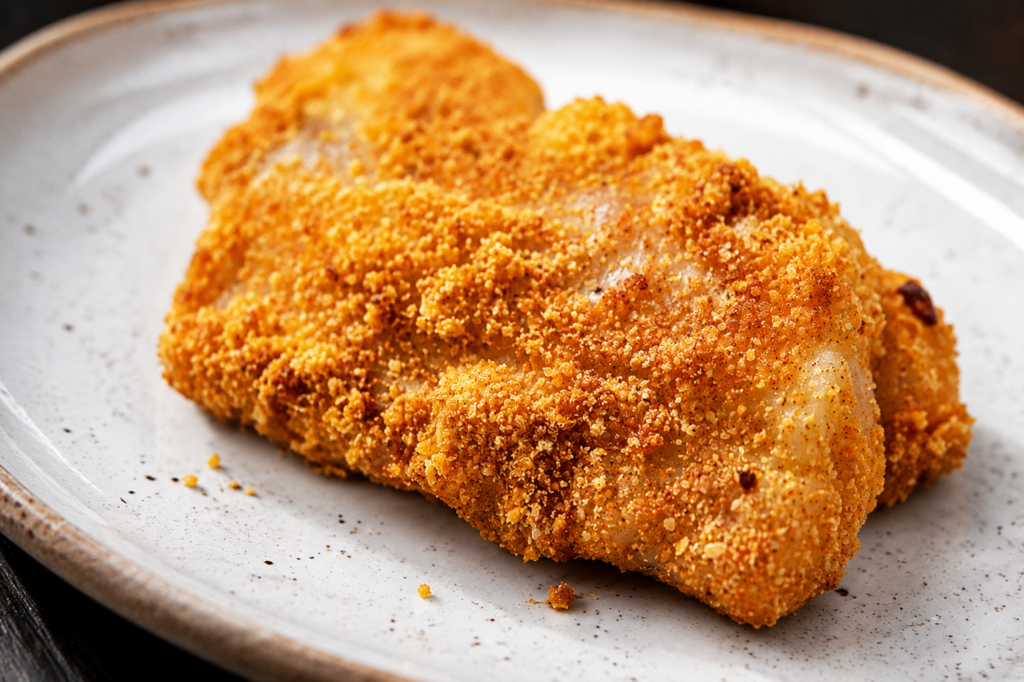
Dip each cod fillet into the egg first, letting the excess drip off, then press it into the parmesan mixture on both sides. You want an even, snug coating — press gently so the cheese actually sticks rather than just resting on top.
Step 3: Bake Until Flaky
Arrange the coated fillets on a greased baking sheet and bake at 425°F for 10 to 12 minutes. You’ll know it’s done when the crust turns golden and the fish flakes apart easily with a fork — don’t rush this by pulling it early, but don’t walk away either, since cod goes from perfectly done to dry pretty fast at this temperature.
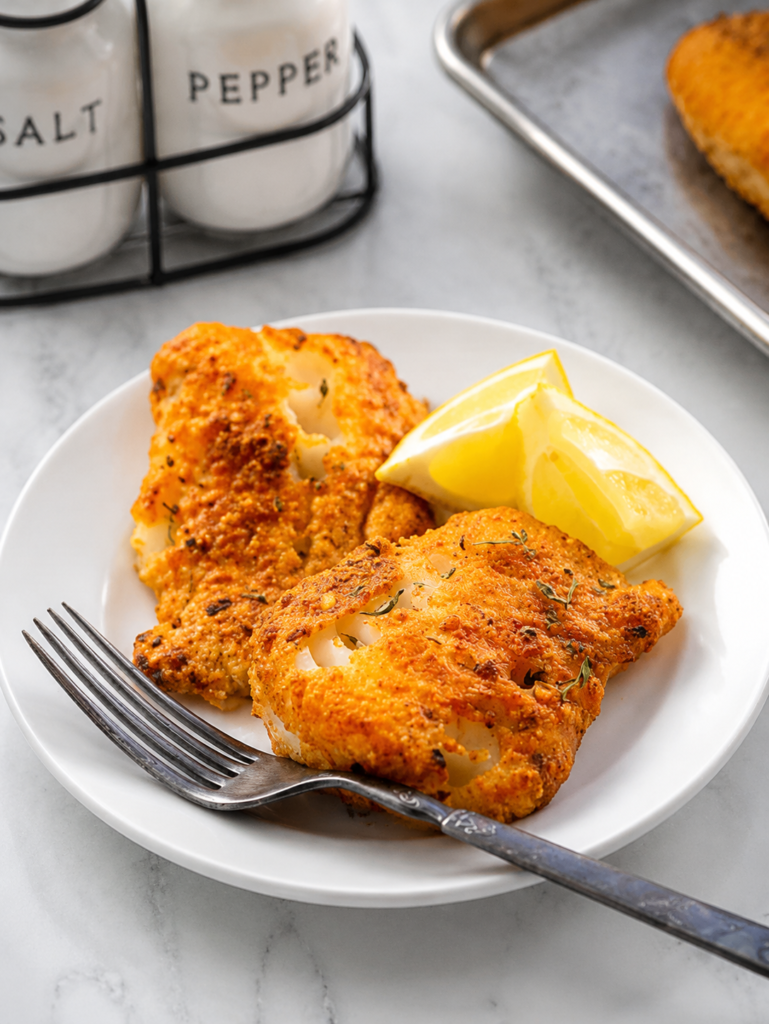
Step 4: Serve Right Away
Squeeze fresh lemon over the top the moment it comes out of the oven — the acidity cuts right through the richness of the parmesan crust. A side of tartar sauce is always welcome if you want something creamier.
Tips for the Best Results
- Pat the cod dry before dipping it in egg — excess moisture keeps the crust from crisping properly.
- Use finely grated parmesan (the shelf-stable kind works fine) for a smoother, more even crust than shredded.
- Check for doneness with a fork twist rather than a thermometer if you don’t have one handy — the fish should flake apart, not resist.
- Don’t overcrowd the baking sheet; give each fillet some breathing room so the crust crisps on all sides.
- Serve it the moment it comes out of the oven — the crust is at its crispiest in that first minute.
Variations to Try
Swap the smoked paprika for a Cajun blend if you want more heat. Any mild, flaky white fish — haddock, halibut, or tilapia — works in place of cod with the same method. For a lower-mess version, use almond flour mixed into the parmesan for extra crunch without the coating falling apart as easily.
What to Serve With It
Roasted asparagus or green beans round this out nicely, as does a simple cauliflower rice pilaf if you’re keeping things low carb. A crisp side salad with a light vinaigrette balances the richness of the crust.
Storage and Reheating
Store leftovers in an airtight container in the fridge for up to two days. Reheat in the oven or air fryer at 350°F to bring the crust back to life — the microwave will get it hot but leaves the coating soft and a little sad.
FAQ
How do I know when the cod is fully cooked?
Twist a fork gently into the thickest part — it should flake apart easily and no longer look translucent. Cod is fully cooked at an internal temperature of 145°F.
Can I use frozen cod?
Yes, just thaw it fully and pat it very dry before coating, or the crust won’t crisp properly.
What other fish works with this method?
Haddock, halibut, and tilapia all work well with the same parmesan crust and bake time.
Can I make the crust spicier?
Add more red pepper flakes or swap in a Cajun seasoning blend for extra kick.
Why did my crust turn out soggy?
This usually means the fish wasn’t dried well before dipping, or the fillets were too crowded on the pan, which traps steam.
Parmesan Crusted Cod
Course: Main CourseCuisine: AmericanDifficulty: Easy4
servings5
minutes12
minutes17
minutes189
kcalMild cod fillets baked with a crisp, savory parmesan crust in under 15 minutes.
Ingredients
4 cod fillets, about 5 ounces each
1 large egg, beaten
1/2 cup grated parmesan
1 teaspoon garlic powder
1 teaspoon onion powder
1 teaspoon smoked paprika
1/2 teaspoon red pepper flakes
Lemon, for serving
Directions
- Preheat oven to 425u00b0F and spray a baking sheet with non-stick spray.
- Place the beaten egg in a shallow dish.
- Combine parmesan, garlic powder, onion powder, smoked paprika, and red pepper flakes in a second shallow dish.
- Dip each cod fillet in the egg, then coat in the parmesan mixture, pressing gently to adhere.
- Arrange the fillets on the baking sheet.
- Bake for 10-12 minutes, until the fish flakes easily with a fork.
- Serve with lemon wedges or tartar sauce.
Notes
- Use finely grated shelf-stable parmesan for the smoothest, crispiest crust.