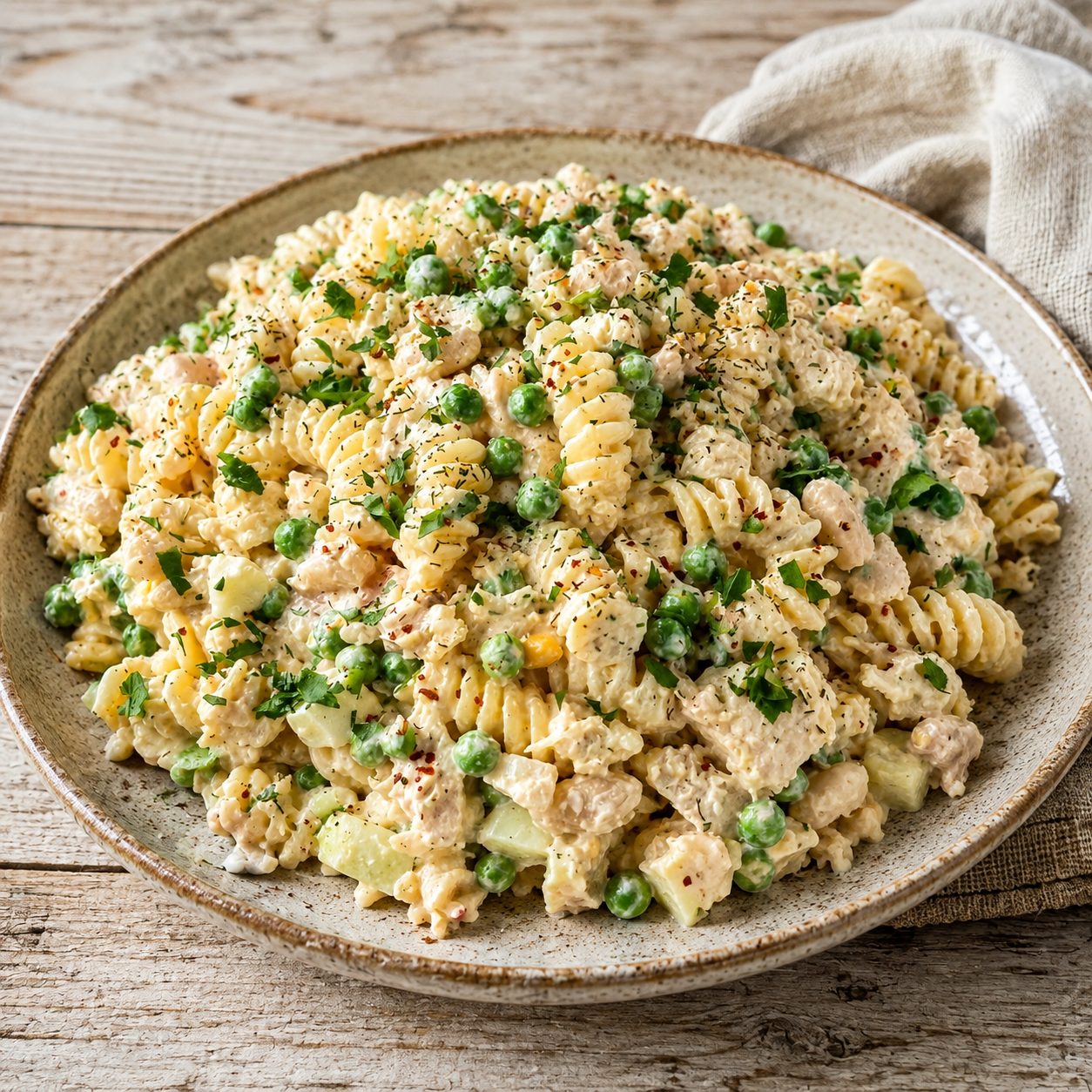
Easy Tuna Pasta Salad, High Protein and Actually Filling
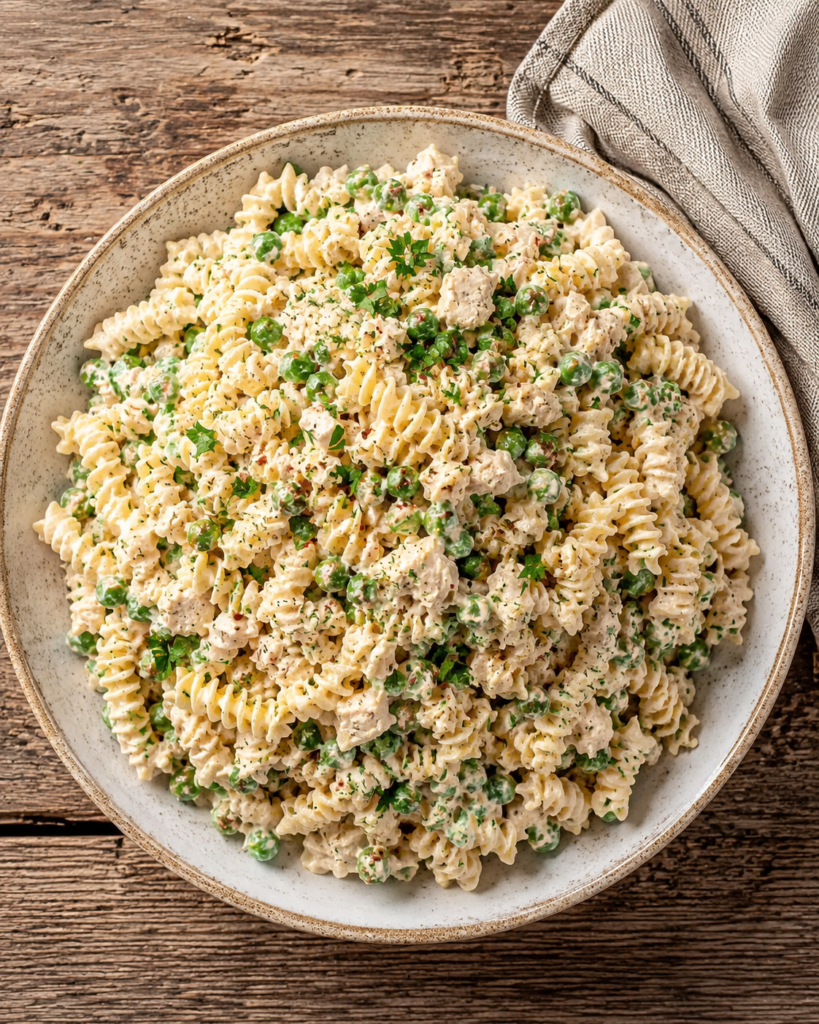
Tuna pasta salad has a reputation for being a mayo-heavy afterthought, the kind of thing tossed together from whatever’s left in the pantry without much thought for how it’ll actually hold you over. This version fixes that by leaning on cottage cheese instead of straight mayonnaise for the sauce, which turns it into something genuinely filling — enough protein and fiber that a bowl of it actually gets you through the afternoon.
It’s become one of my go-to pantry recipes, the kind of thing I can throw together almost entirely from cans and staples already sitting in the cupboard, with just enough fresh add-ins to keep it from feeling like an emergency meal.
Why You’ll Love This
It’s built for high-volume, high-protein eating — just 8 ounces of pasta bulked up with tuna, beans, eggs, and peas, so you get a genuinely satisfying bowl without loading up on refined carbs. The cottage cheese sauce blends completely smooth, so you’d never guess it’s in there, and the whole thing comes together in about thirty minutes using mostly pantry staples.
Why This Works
Cooking the pasta fully, past al dente, matters more than usual here, since pasta actually firms up as it cools, and salad pasta that started too firm ends up brittle and unpleasant once chilled. And waiting to add salt until everything is fully mixed is just as important — both cottage cheese and tuna carry their own sodium, and salting too early risks a salad that’s oversalted before you’ve even tasted the finished mix.
How to Make Easy Tuna Pasta Salad
Step 1: Make the Sauce
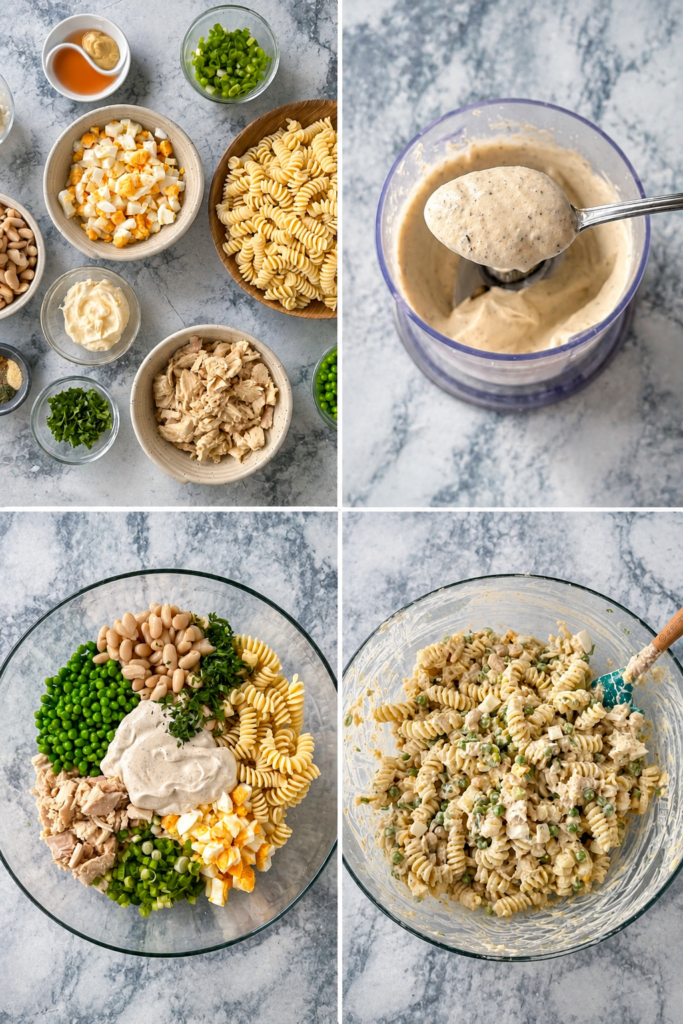
Add the cottage cheese, mayonnaise, Dijon, 2 tablespoons of the red wine vinegar, and the seasonings (except salt) to a small food processor or blender. Blend until completely smooth, scraping down the sides as needed. Transfer the sauce to a large bowl.
Step 2: Cook the Pasta
Cook the pasta according to package directions, but go past al dente — you want it fully cooked, since it firms up as it cools and can turn brittle in the finished salad if undercooked.
Step 3: Build the Salad
Add both cans of tuna, juice included, to the bowl with the sauce, and break up any large chunks with a fork. Rinse the frozen peas under hot water to thaw, drain well, and add them in. Rinse and drain the beans and add those too. Chop the hard-boiled eggs and stir them in along with the sliced scallions.
Step 4: Combine with the Pasta
Once the pasta is fully cooked, rinse it with cold water to stop the cooking and drain well. Add it to the bowl and gently stir everything together until well combined.
Step 5: Season and Serve
Taste and adjust the salt, pepper, and vinegar to your liking — go easy on the salt at first, since the cottage cheese and tuna already bring plenty.
Tips for the Best Results
- Cook the pasta fully, not al dente — it firms up as it chills and can turn unpleasantly hard if undercooked.
- Hold off on adding salt until everything is mixed, since both cottage cheese and tuna are naturally salty.
- If your finished salad turns out runny, drain some of the tuna juice next time rather than adding it all.
- Add a squeeze of fresh lemon at the end for extra brightness.
- If you’re making this ahead, wait to salt until just before serving, since the flavors shift and develop in the fridge.
Variations to Try
Add diced celery, bell peppers, or red onion for extra crunch and fiber. Swap peas for edamame if you’re not a fan of peas. If eggs aren’t an option, they can be left out without disrupting the rest of the recipe. For a dairy-free version, try blending in a dairy-free yogurt in place of the cottage cheese.
What to Serve With It
This salad is filling enough to eat entirely on its own, but crusty bread or crackers on the side round it out if you want something extra. It also works well alongside a simple green salad for a lighter lunch spread.
Storage
Store in a covered container in the fridge for up to 4 days. This salad isn’t recommended for freezing, since the texture of the pasta and sauce won’t hold up well once thawed.
FAQ
Can I make this without cottage cheese?
If you can’t do dairy, a dairy-free yogurt is worth trying in place of the cottage cheese for a similarly creamy sauce.
Why did my salad turn out runny?
This often comes down to adding all the tuna juice — try draining it off, or using just one can’s worth of liquid, next time.
Do I need to cook the peas?
No, just rinse frozen peas under hot water to thaw them and drain well before adding.
Can I leave out the eggs or beans?
Yes, both are there for added protein, but the salad still works well without them if you’re missing an ingredient or avoiding eggs.
How long does this salad keep?
Up to 4 days in a covered container in the fridge. It’s not recommended for freezing.
Easy Tuna Pasta Salad
Course: Main CourseCuisine: AmericanDifficulty: Easy6
servings20
minutes10
minutes30
minutes366
kcalTuna, beans, eggs, and peas tossed with pasta in a creamy, high-protein cottage cheese sauce.
Ingredients
8 oz dry protein pasta
2 (5 oz) cans albacore tuna in water
1 (15.5 oz) can cannellini beans, drained
4 large hard-boiled eggs
2 scallions, thinly sliced
1 cup frozen peas
1 cup whole milk cottage cheese
1/2 cup mayonnaise
2-4 tablespoons red wine vinegar
2 teaspoons Dijon mustard
1 teaspoon dried dill
1 teaspoon garlic powder
1 teaspoon onion powder
1/2 teaspoon black pepper
Salt, to taste
Directions
- Blend cottage cheese, mayonnaise, Dijon, 2 tablespoons vinegar, and seasonings (except salt) in a food processor until smooth. Transfer to a large bowl.
- Cook pasta according to package directions, cooking past al dente until fully tender.
- Add tuna with its juice to the sauce bowl, breaking up chunks with a fork.
- Rinse peas under hot water to thaw, drain, and add to the bowl along with drained beans, chopped eggs, and scallions.
- Rinse cooled pasta with cold water, drain well, and add to the bowl.
- Gently stir everything together, then taste and adjust salt, pepper, and vinegar.
Notes
- Wait until everything is mixed before adding salt, since cottage cheese and tuna are both naturally salty.