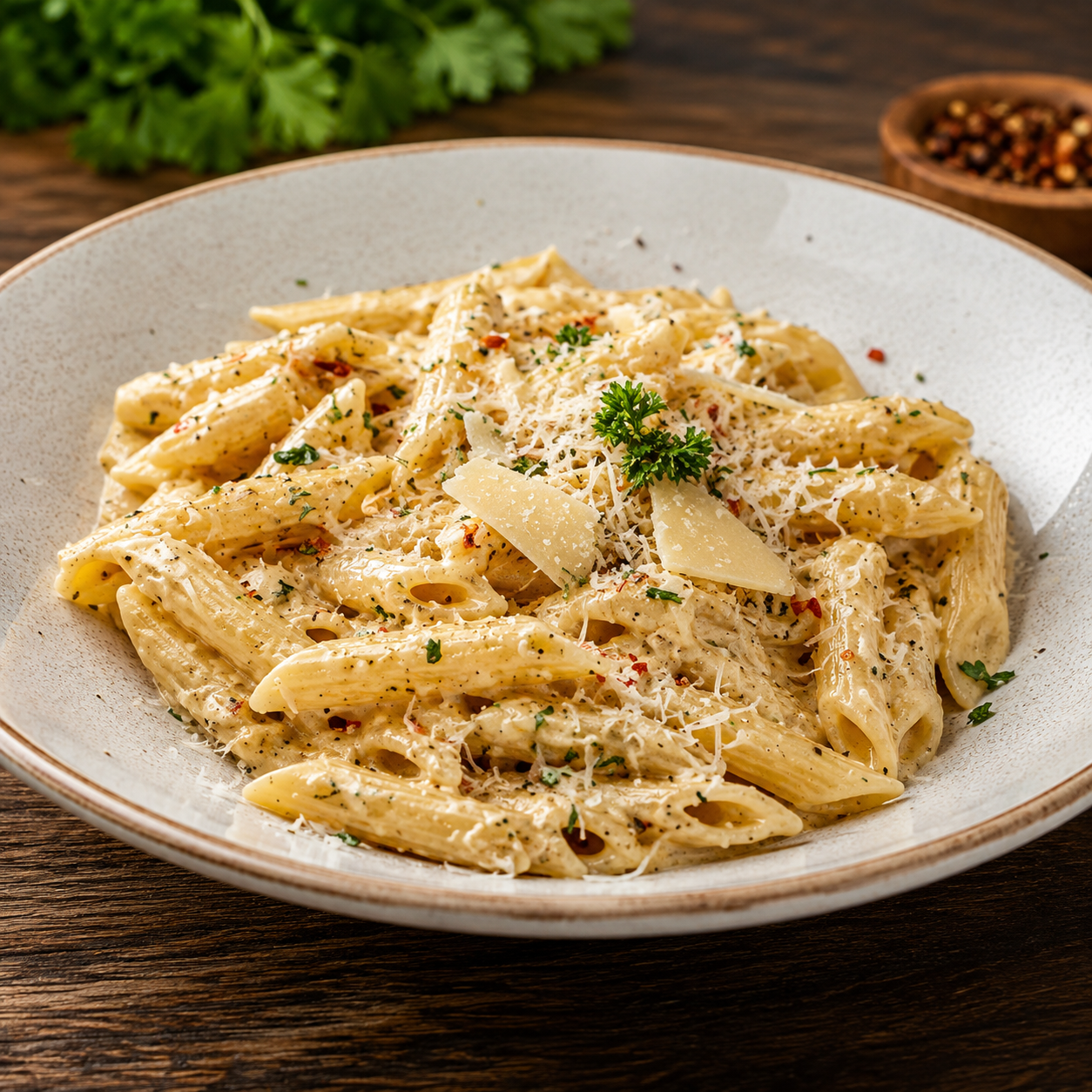
One Pot Creamy Garlic Pasta in 20 Minutes
This is my go-to one pot garlic pasta recipe, and it never lets me down.
Some nights the deciding factor for dinner isn’t flavor, it’s dishes. This pasta wins on both counts. The noodles cook right in the same pot as the sauce, no separate pot of boiling water, no colander, which means the whole meal from stovetop to table leaves you with exactly one thing to wash.
It’s become the recipe I reach for when I want something that tastes rich and considered but genuinely only takes twenty minutes of my evening.
Why You’ll Love This
Everything happens in one pot, which keeps cleanup about as painless as dinner gets. The garlic flavor is bold without being harsh, the sauce turns silky as the pasta’s own starch thickens it, and it’s endlessly adaptable — toss in whatever protein or vegetable you’ve got open in the fridge.
Why This Works
Simmering the pasta directly in milk and water, rather than boiling it separately, lets the starch it releases thicken the liquid into a natural sauce base as it cooks. The most common way this goes wrong is rushing the reduction or skimping on liquid — the sauce needs those full 8 to 10 minutes of simmering, stirred often, for the milk to actually reduce down into something creamy rather than staying thin and soupy. Stirring in the parmesan at the very end, off the heat if needed, is what pulls it together into a properly thick, cling-to-the-noodles sauce.
How to Make One Pot Creamy Garlic Pasta
Step 1: Sauté the Garlic
Melt the butter, or heat the olive oil, in a large pot or deep skillet over medium heat. Add the minced garlic and sauté for 1 to 2 minutes until fragrant, stirring constantly so it doesn’t burn.
Step 2: Add the Pasta and Liquid
Pour in the dry pasta, milk, and just enough water to barely cover the noodles. Stir to combine and bring to a gentle boil.
Step 3: Simmer Until Tender
Reduce the heat to a simmer and cook uncovered, stirring frequently, for 8 to 10 minutes, until the pasta is al dente and most of the liquid has reduced into a creamy consistency. This is the step people rush — give it the full time and keep stirring, or the sauce won’t thicken properly.
Step 4: Stir in Cheese and Seasoning
Add the parmesan, salt, pepper, and Italian seasoning, stirring until the cheese melts and the sauce thickens further. For extra richness, stir in a spoonful of cream cheese or sour cream.
Step 5: Serve
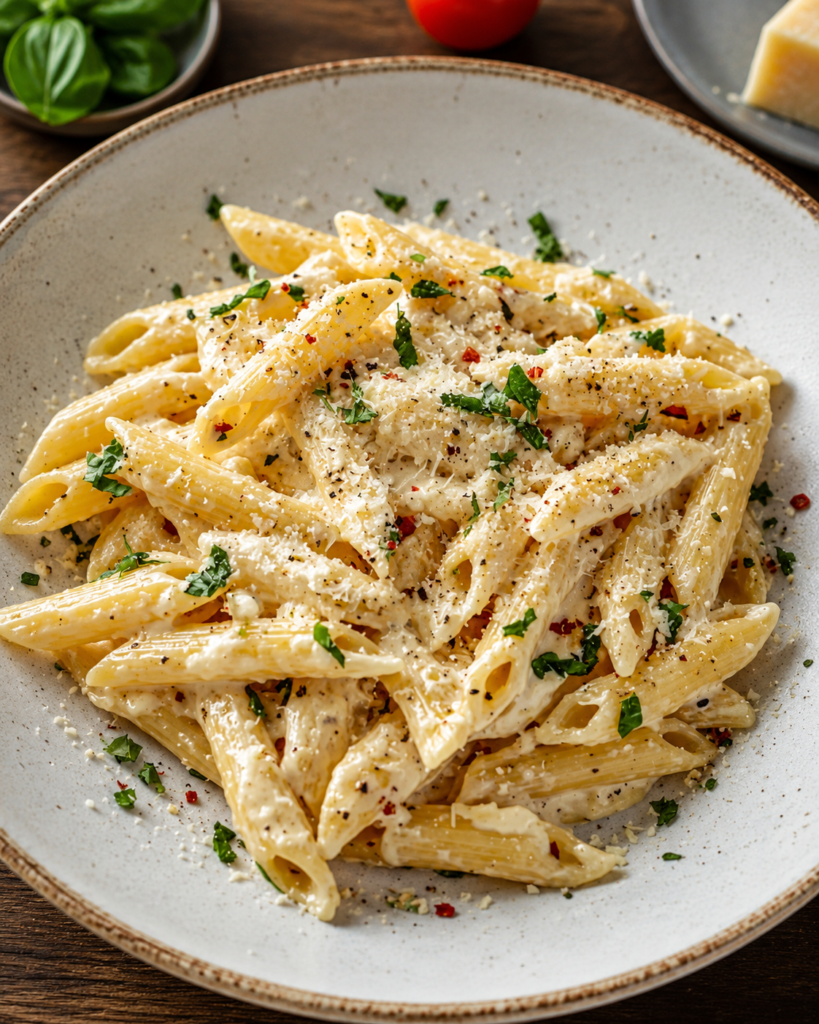
Garnish with chopped parsley or basil and serve immediately, while it’s hot and at its creamiest.
Tips for the Best Results
- Use whole milk if you can — the extra fat helps build a properly creamy sauce.
- Don’t rush the simmer; the full 8 to 10 minutes gives the starch time to actually thicken the liquid.
- Grate your own parmesan rather than using the pre-shredded kind for a smoother melt.
- If your sauce still looks thin after adding cheese, stir in a spoonful of cream cheese or sour cream to bring it together.
- Jarred minced garlic works fine if you’re short on time — about 2 teaspoons stands in for 4 cloves.
Variations to Try
Fold in grilled chicken, cooked shrimp, or crispy bacon for extra protein. Baby spinach, sautéed mushrooms, frozen peas, or sun-dried tomatoes all work well stirred in near the end. Swap the parmesan for Pecorino Romano or a bit of Gouda for a different flavor, and add red pepper flakes or Cajun seasoning if you want some heat.
What to Serve With It
A simple green salad with balsamic or lemon vinaigrette balances the richness nicely. Garlic bread or crusty sourdough is great for scooping up extra sauce, and roasted broccoli or asparagus round out the meal with some vegetables.
Storage and Reheating
Store leftovers in an airtight container in the fridge for up to 3 days. Reheat gently with a splash of milk or water to rehydrate the sauce, stirring often. This dish isn’t a good candidate for freezing, since dairy-based sauces tend to separate and turn grainy once thawed.
FAQ
Can I freeze this pasta?
It’s not recommended — dairy-based sauces like this one tend to separate and become grainy upon reheating from frozen.
Can I use a different type of pasta?
Yes, linguine, rotini, or fettuccine all work well; just adjust the cooking time slightly based on the shape you choose.
How do I make this spicier?
Add red pepper flakes when sautéing the garlic, or stir them in at the end for a milder kick.
Why did my sauce turn out thin instead of creamy?
This usually means the pasta needed more simmering time to reduce the liquid, or the cheese wasn’t fully melted in. Give it the full 8-10 minutes and stir in an extra spoonful of parmesan or cream cheese if needed.
Can I use jarred minced garlic?
Yes, about 2 teaspoons of jarred minced garlic is roughly equivalent to 4 fresh cloves.
One Pot Creamy Garlic Pasta
Course: Main CourseCuisine: ItalianDifficulty: Easy4
servings5
minutes15
minutes20
minutes430
kcalPasta simmered directly in milk and garlic until the liquid reduces into a silky parmesan sauce.
Ingredients
8 oz pasta (spaghetti, linguine, or penne)
1 tablespoon butter or olive oil
4 cloves garlic, minced
2 cups milk, whole preferred
1 cup water, or as needed to just cover the pasta
3/4 cup freshly grated Parmesan cheese
1/2 teaspoon salt, or to taste
1/4 teaspoon black pepper
1 teaspoon Italian seasoning
2 tablespoons cream cheese or sour cream, optional
Chopped parsley or basil, optional, for garnish
Directions
- Melt butter or heat olive oil in a large pot over medium heat. Add garlic and sautu00e9 1-2 minutes until fragrant.
- Add dry pasta, milk, and enough water to just cover the pasta. Stir and bring to a gentle boil.
- Reduce heat to a simmer and cook uncovered, stirring frequently, 8-10 minutes, until pasta is al dente and liquid has reduced.
- Stir in parmesan, salt, pepper, and Italian seasoning until melted and thickened. Add cream cheese or sour cream for extra creaminess if desired.
- Garnish with parsley or basil and serve immediately.
Notes
- Don’t rush the simmer step u2014 the full 8-10 minutes lets the pasta’s starch properly thicken the sauce.