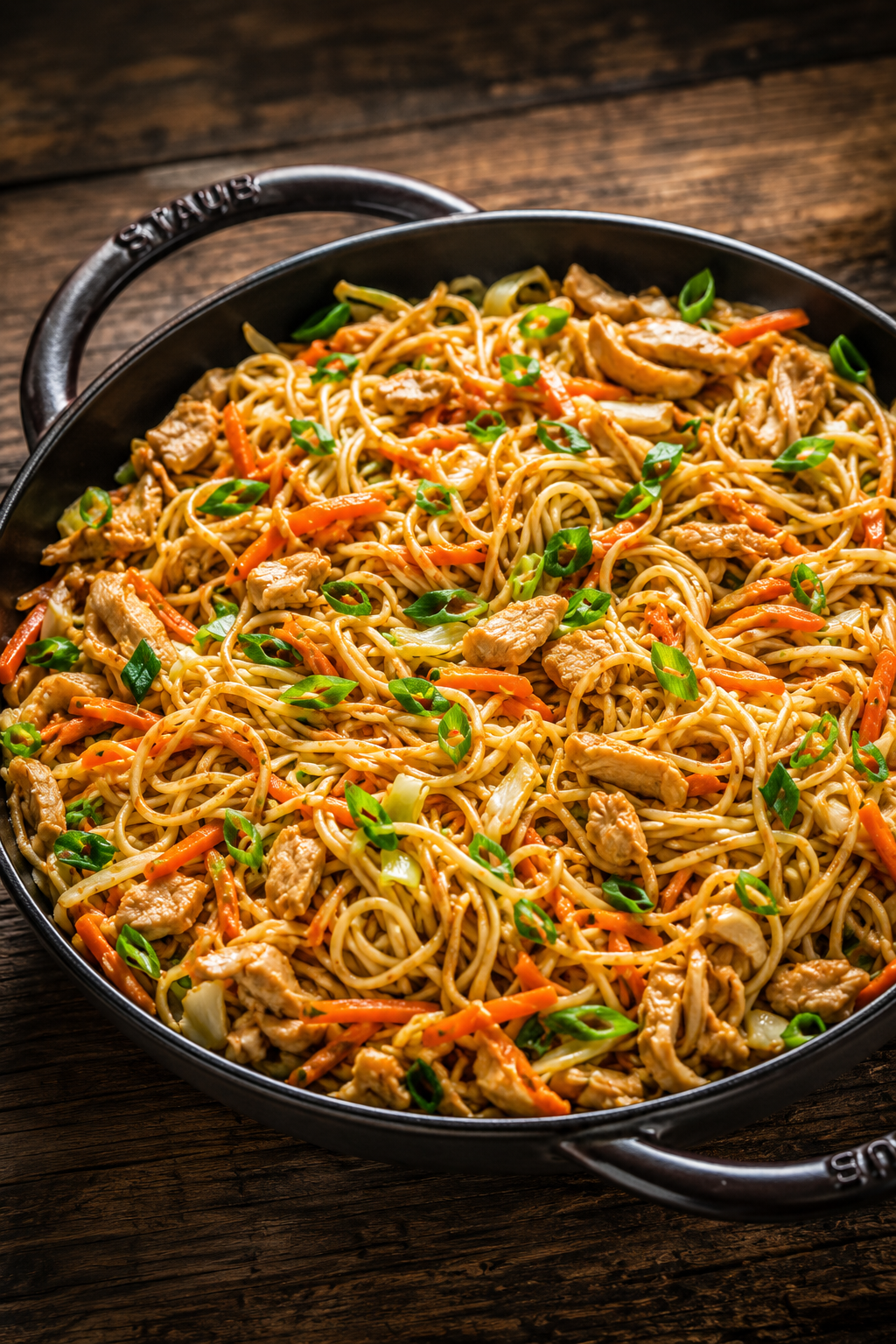
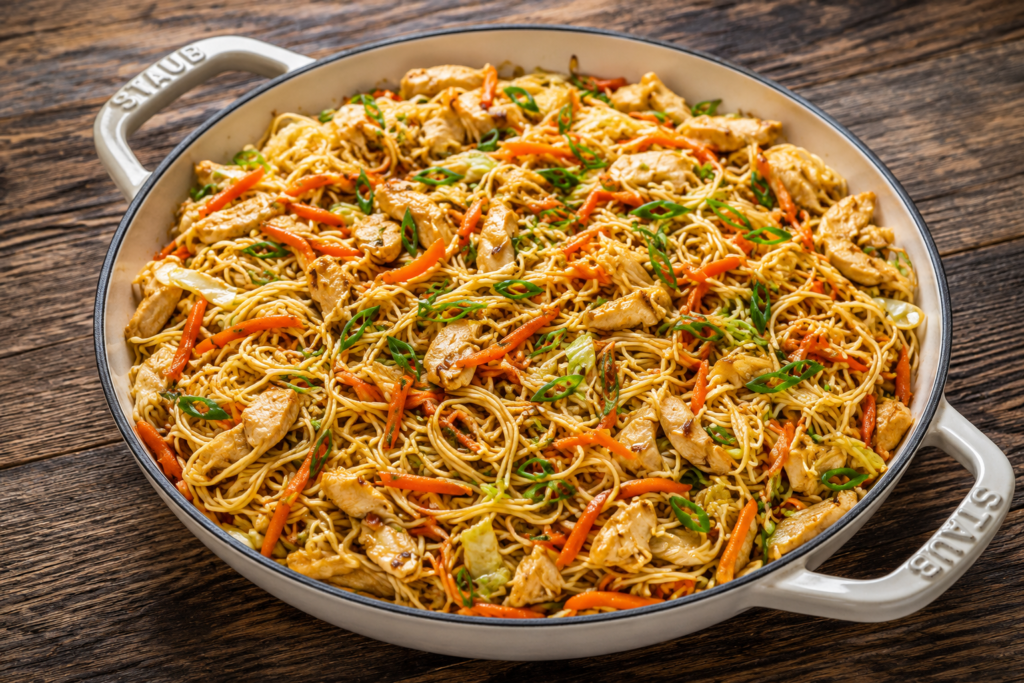
Chicken Chow Mein, Way Better Than Takeout
This is my go-to chicken chow mein recipe, and it never lets me down.
Chow mein is one of those takeout orders that feels like it should be complicated to recreate at home, dark glossy noodles, that particular sweet-salty balance, until you actually make the sauce yourself and realize it’s six ingredients whisked together in a bowl. Once I figured that out, our regular Friday night order started happening in my own kitchen instead.
What I love about this one is how little it asks of you. One pan, a handful of vegetables, noodles that crisp up just slightly at the edges, and a sauce that ties it all together in under two minutes once everything’s back in the pan.
Why You’ll Love This
It comes together in about thirty-five minutes and uses one pan for the whole thing, which keeps cleanup simple. The homemade sauce tastes noticeably better than most bottled versions, striking that sweet-savory balance chow mein is known for, and it’s easy to swap in whatever protein or vegetables you have sitting in the fridge.
Why This Works
Cooking the chicken first and setting it aside, rather than crowding the pan with everything at once, is what gets it properly golden brown instead of steamed and pale. And whisking the cornstarch into the sauce ahead of time means it thickens quickly and evenly once it hits the hot pan, clinging to the noodles rather than pooling loose at the bottom.
How to Make Chicken Chow Mein
Step 1: Make the Sauce
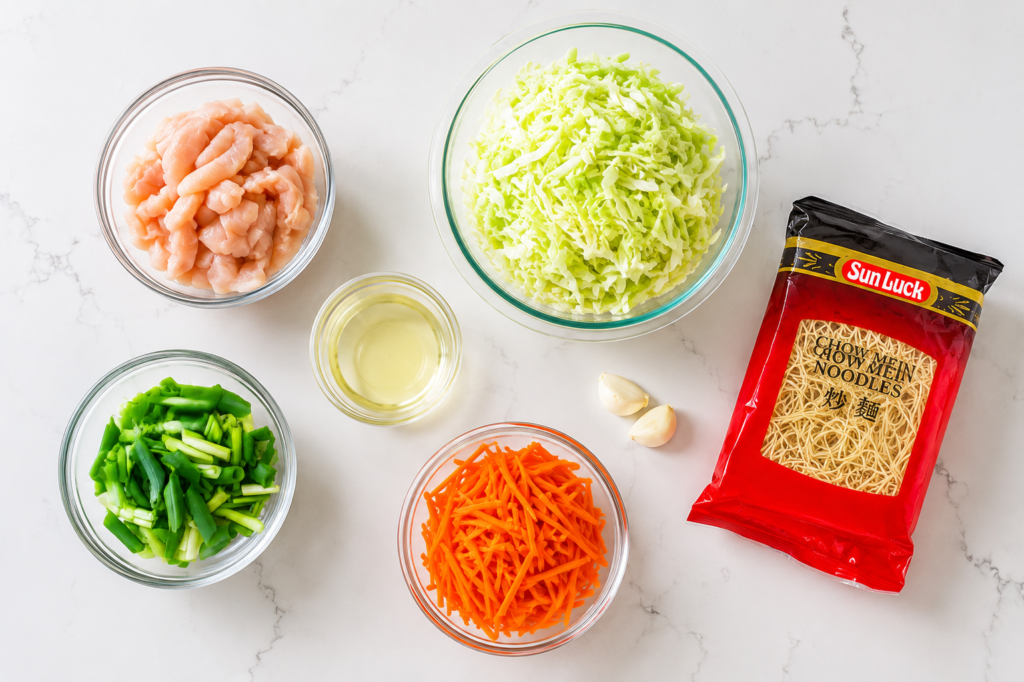
In a small mixing bowl, whisk together the oyster sauce, granulated sugar, sesame oil, soy sauce, chicken broth, and cornstarch until smooth. Set aside.
Step 2: Cook the Noodles
Cook the chow mein noodles according to the package instructions, then drain, rinse with cold water, and set aside.
Step 3: Sear the Chicken
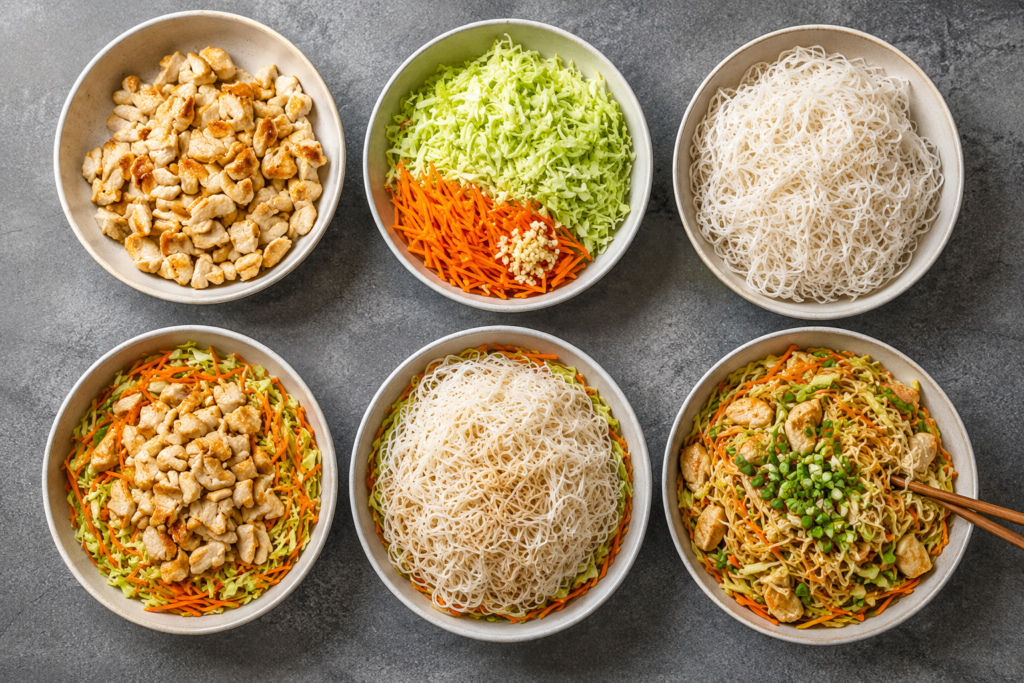
Heat oil in a large wok or pan over medium heat. Cut the chicken breasts into bite-sized strips and cook until golden brown. Remove the chicken and set aside.
Step 4: Sauté the Vegetables
Add the julienned carrots, cabbage, and pressed garlic to the same pan, and sauté for a few minutes until the vegetables are slightly softened and the cabbage turns a bit translucent.
Step 5: Bring It All Together
Add the chicken and noodles back into the pan. Pour the sauce over the top and cook everything together for about 2 minutes, tossing so the sauce coats every strand evenly.
Step 6: Garnish and Serve
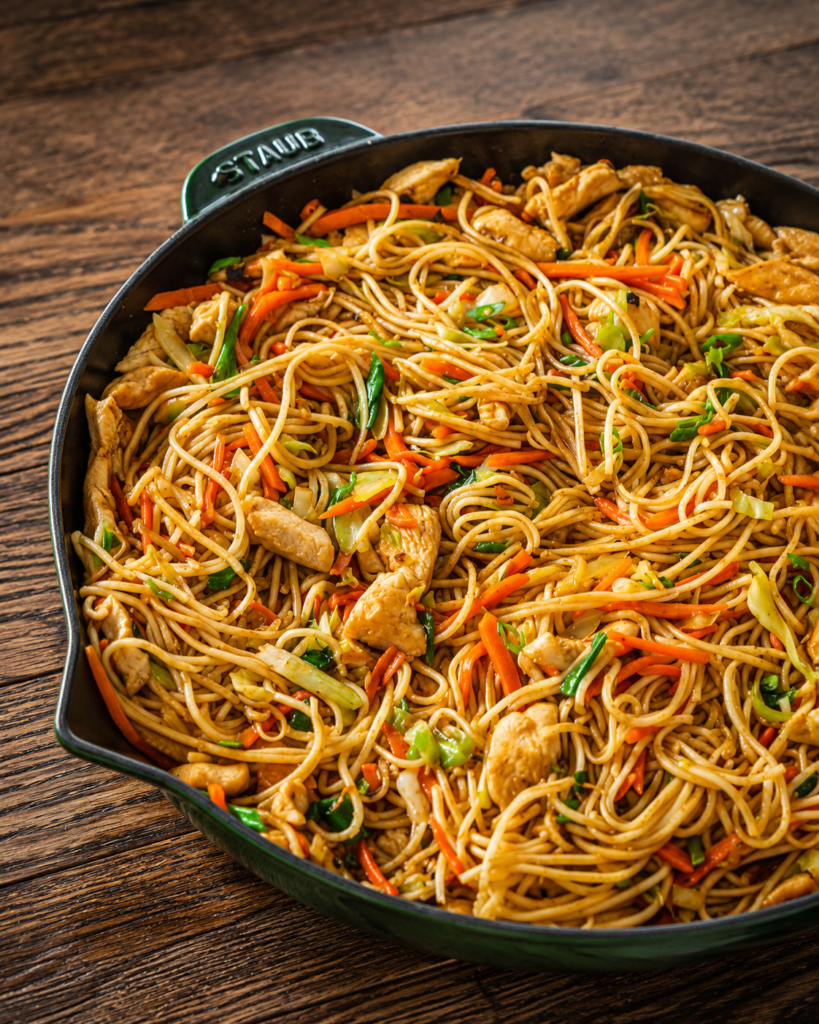
Garnish with chopped green onions and serve straight from the pan while it’s still hot.
Tips for the Best Results
- Cook the chicken in batches if your pan is on the smaller side, so it browns instead of steaming.
- Whisk the sauce well before adding it so the cornstarch doesn’t clump.
- If using pre-cooked chow mein noodles from the refrigerated section, aim for about 1 pound.
- Oyster sauce varies in saltiness between brands, so taste and adjust if using regular rather than low-sodium soy sauce.
- Don’t overcook the vegetables — you want them slightly softened, not mushy.
Variations to Try
Swap the chicken for beef, shrimp, or pork depending on what you’re in the mood for. Bok choy, celery, broccoli, spinach, or baby corn can all stand in for or join the cabbage and carrots. For a vegetarian version, use vegetable broth in the sauce and toss in cubes of baked tofu instead of chicken.
What to Serve With It
This dish is a complete meal on its own, but egg drop soup or a simple cucumber salad make nice additions if you want to round out the spread.
Storage and Reheating
Store leftovers in an airtight container in the fridge for up to 3 days. Reheat in a skillet over medium heat with a splash of water or broth to loosen the noodles, or microwave in short intervals, stirring in between.
FAQ
What are chow mein noodles?
They’re wheat and egg noodles similar to Italian pasta, with a satisfying bite. Look for them dried in the Asian aisle, or pre-cooked in the refrigerated section of most grocery stores.
Can I use a different protein?
Yes, beef, shrimp, or pork all work well in place of chicken, and baked tofu makes a good vegetarian option.
What vegetables work in chow mein?
Carrots, cabbage, green onions, and bean sprouts are classic, but bok choy, celery, broccoli, spinach, and baby corn all work too.
How do I make this vegetarian?
Use vegetable broth in the sauce and toss cubes of baked tofu with some of the noodles instead of chicken.
Why is my sauce too salty?
Oyster sauce brands vary in salt content, and using regular soy sauce instead of low-sodium can make it saltier — adjust the oyster sauce to taste next time.
Chicken Chow Mein
Course: Main CourseCuisine: Asian, ChineseDifficulty: Easy8
servings15
minutes20
minutes35
minutes340
kcalGolden seared chicken and crisp-tender vegetables tossed with pan-fried noodles in a sweet, savory homemade sauce.
Ingredients
1 lb chicken breast, boneless and skinless
3 tablespoons oil
12 oz chow mein noodles, uncooked
2 cups cabbage
1 large carrot, julienned
1/2 bunch green onions
2 garlic cloves, pressed
4 tablespoons oyster sauce, or to taste
3 tablespoons low sodium soy sauce
3 tablespoons light sesame oil (not toasted)
1/2 cup chicken broth
1 tablespoon corn starch
1 tablespoon granulated sugar
Directions
- Whisk together oyster sauce, sugar, sesame oil, soy sauce, chicken broth, and cornstarch in a small bowl. Set aside.
- Cook noodles according to package instructions, drain, rinse with cold water, and set aside.
- Heat oil in a large wok over medium heat. Cut chicken into bite-sized strips and cook until golden brown. Remove and set aside.
- Add carrots, cabbage, and pressed garlic to the pan and sautu00e9 a few minutes until slightly softened.
- Add chicken and noodles back to the pan. Pour sauce over the top and cook together 2 minutes.
- Garnish with chopped green onions and serve hot.
Notes
- If using pre-cooked chow mein noodles, use about 1 pound. Oyster sauce varies in saltiness, so adjust to taste.